How to Learn Turkish for Nurses: Essential Medical Phrases & Clinical Guide

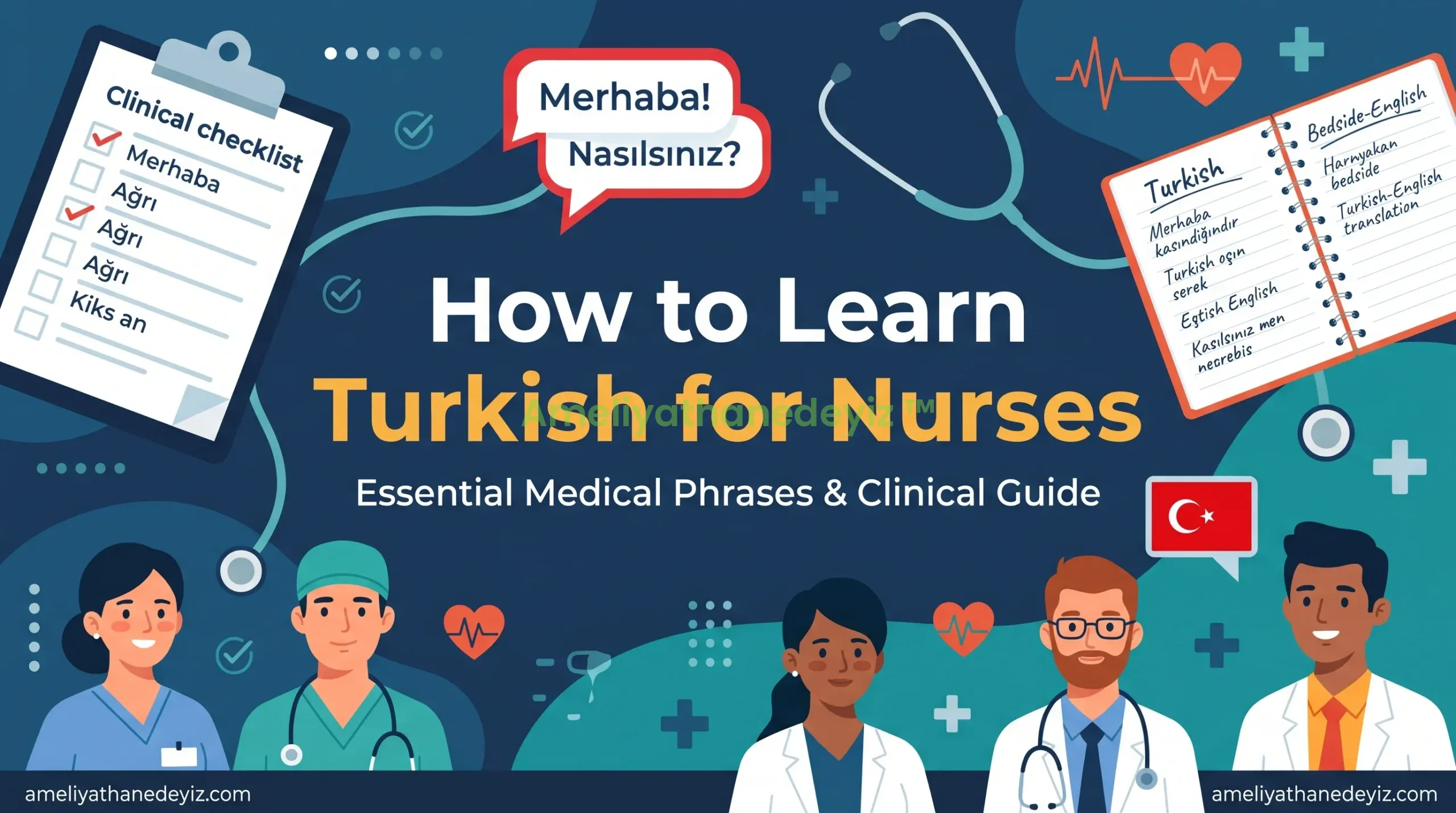
Mastering medical Turkish is one of the highest-leverage skills you can develop if you are planning a clinical rotation, pursuing a career, or working within medical tourism in Türkiye. While many international hospitals employ translators, patients feel significantly safer when their nurse can ask basic triage questions, assess pain, and offer reassurance directly in their native language. Before diving into clinical vocabulary, understanding how the healthcare system works in Turkey will give you vital context on hospital workflows and patient expectations.
Why Learn Medical Turkish as a Nurse?
Türkiye has become a global hub for complex surgical procedures, organ transplants, and aesthetic surgeries. Whether you are exploring nursing in Turkey as a local or international student or working alongside Turkish surgical teams, bridging the language gap directly impacts patient safety:
Faster Triage & Pain Assessment: Immediate verbal feedback prevents delays in administering analgesics or recognizing acute complications.
Reduced Preoperative Anxiety: Explaining basic preparation steps calmly in Turkish builds instant trust before entering the operating theatre.
Seamless Team Collaboration: Recognizing core Turkish anatomical and procedural terms helps you follow rapid verbal orders during emergencies.
Step-by-Step: How to Start Learning Turkish for Nursing
Standard language apps focus on ordering coffee or booking hotels—vocabulary that rarely helps during a busy hospital shift. Follow this structured 4-step clinical approach instead:
Master Phonetic Pronunciation First: Turkish is a strictly phonetic language—every letter is pronounced consistently just as it is written. Learning the Turkish alphabet (especially ç, ğ, ı, ö, ş, ü) takes less than an hour and allows you to read medical charts aloud accurately.
Focus on Imperatives and Polite Requests: Nursing communication relies heavily on gentle instructions (e.g., “Take a deep breath” or “Lie down”). Learn the polite plural/formal suffix “-ın / -in / -un / -ün” used when addressing adult patients.
Group Vocabulary by Clinical Workflow: Instead of memorizing random word lists, categorize phrases by shift stages: Admission, Vital Signs, Pain Assessment, Medication Administration, and Postoperative Care.
Learn Hospital Titles & Hierarchy: Familiarize yourself with local clinical titles—for example, knowing what Op. Dr. means in Turkey or how operating room nurses coordinate with surgical teams ensures smooth professional communication.
Essential Turkish Phrases for Nurses (Clinical Cheat Sheet)
Keep these high-frequency phrases handy during patient rounds, triage, and bedside care:
1. Admission, Greetings & Reassurance
| English Phrase | Turkish Translation | Pronunciation Guide |
| Hello, I am your nurse. | Merhaba, ben hemşirenizim. | Mehr-hah-bah, ben hem-shee-reh-nee-zeem |
| How are you feeling today? | Bugün kendinizi nasıl hissediyorsunuz? | Boo-goon ken-dee-nee-zee nah-suhl hiss-eh-dee-yor-soo-nooz |
| Please don’t worry, you are safe. | Lütfen endişelenmeyin, güvendesiniz. | Loot-fen en-dee-sheh-len-meh-yeen, goo-ven-deh-see-neez |
| Do you have any allergies? | Herhangi bir alerjiniz var mı? | Her-hahn-gee beer ah-ler-zhee-neez vahr muh |
| Are you taking any regular medications? | Düzenli kullandığınız bir ilaç var mı? | Doo-zen-lee kool-lahn-duh-uh-nuhz beer ee-lach vahr muh |
2. Assessing Pain & Symptoms
| English Phrase | Turkish Translation | Pronunciation Guide |
| Where does it hurt? | Nereniz ağrıyor? | Neh-reh-neez ah-ruh-yor |
| Can you rate your pain from 1 to 10? | Ağrınızı 1’den 10’a kadar puanlar mısınız? | Ah-ruh-nuh-zuh beer-den oh-nah kah-dahr poo-ahn-lahr muh-suh-nuhz |
| Do you feel dizzy or nauseous? | Baş dönmesi veya mide bulantısı var mı? | Bahsh dön-meh-see veh-yah mee-deh boo-lahn-tuh-suh vahr muh |
| Are you having trouble breathing? | Nefes almakta zorlanıyor musunuz? | Neh-fess ahl-mahk-tah zor-lah-nuh-yor moo-soo-nooz |
3. Vital Signs, Procedures & Pre-Op Instructions
| English Phrase | Turkish Translation | Pronunciation Guide |
| I am going to check your blood pressure. | Tansiyonunuzu ölçeceğim. | Tahn-see-yoh-noo-noo-zoo öl-cheh-jeh-eem |
| Take a deep breath and hold it. | Derin bir nefes alın ve tutun. | Deh-reen beer neh-fess ah-luhn veh too-toon |
| You will feel a small pinch (IV/injection). | Küçük bir sinek ısırığı hissedeceksiniz. | Koo-chook beer see-nek uh-suh-ruh-uh hiss-eh-deh-jek-see-neez |
| You must not eat or drink anything before surgery. | Ameliyattan önce hiçbir şey yememeli ve içmemelisiniz. | Ah-meh-lee-yaht-tahn ön-jeh heech-beer shey yeh-meh-meh-lee veh eech-meh-meh-lee-see-neez |
Cultural Nuances in Turkish Hospitals
Language fluency in healthcare goes beyond grammar; cultural etiquette shapes how patients respond to your care:
Respectful Forms of Address: In Turkish clinical settings, calling an elderly patient solely by their first name can sound overly blunt. Nurses warmly address older male patients as “Amca” (Uncle) or “Beyefendi” (Sir), and older female patients as “Teyze” (Aunt) or “Hanımefendi” (Ma’am).
Family-Centered Care: Hospitalized patients in Türkiye are almost always accompanied by a family caregiver (refakatçi). Addressing both the patient and their refakatçi when explaining discharge or operating room processes significantly improves compliance.
Frequently Asked Questions (FAQ)
References & Disclaimer
References: The clinical communication frameworks, Turkish healthcare system terminology, and hospital etiquette guidelines in this article are compiled based on standard clinical nursing practices in Türkiye, official Turkish Medical Terminology standards (Türk Dil Kurumu – Tıp Terimleri Kılavuzu), and international patient care protocols.
Disclaimer: Ameliyathanedeyiz.com is an independent healthcare education and information portal and has no direct affiliation with the Republic of Türkiye Ministry of Health or any official licensing body. The language translations, phonetic pronunciations, and clinical communication examples provided in this guide are strictly for educational and informational purposes. They do not replace certified medical interpretation services in critical, surgical, or legally binding informed consent procedures. Furthermore, official nursing equivalency (denklik) and Turkish language proficiency requirements (e.g., TÖMER B2/C1 levels) are subject to regulatory updates by the Turkish Council of Higher Education (YÖK) and the Ministry of Health. Always consult official government channels for licensing regulations and utilize certified medical translators when obtaining patient consent.
 Tepki Ver